- Understanding Your A1c
- Heart and Stroke
- Kidney
- Foot
- Eye
- Skin
- Depression
- Oral and Hygiene
Understanding Your A1c
Because your sugar level can change from hour to hour, we required you to test your blood four time per day (daily A1c). A test that sums up how much glucose has been sticking to part of the hemoglobin during the past 3–4 months. Hemoglobin is a substance in the red blood cells that supplies oxygen to the cells of the body.
A1c Levels |
Glucose Range |
|
4.0 |
65 mg/dL |
| 4.2 |
72 mg/dL |
| 4.4 |
79 mg/dL |
| 4.6 |
86 mg/dL |
| Good |
| 4.7 |
90 mg/dL |
| 4.9 |
97 mg/dL |
| 5.0 |
101 mg/dL |
| 5.1 |
104 mg/dL |
| 5.2 |
108 mg/dL |
5.3 |
111 mg/dL |
| 5.6 |
122 mg/dL |
| ** High |
| 5.8 |
129 mg/dL |
| 5.9 |
133 mg/dL |
*** Diabetes |
6.0 |
136 mg/dL |
6.2 |
143 mg/dL |
6.4 |
151 mg/dL |
| 6.6 |
158 mg/dL |
| 6.8 |
165 mg/dL |
| 6.9 |
168 mg/dL |
Deathly |
7.0 |
172 mg/dL |
| 7.2 |
180 mg/dL |
| 7.4 |
186 mg/dL |
| 7.6 |
193 mg/dL |
| 7.8 |
200 mg/dL |
| 8.0 |
207 mg/dL |
| 8.2 |
215 mg/dL |
| 8.4 |
222 mg/dL |
| 8.6 |
229 mg/dL |
| 8.8 |
236 mg/dL |
| 9.0 |
243 mg/dL |
| 10.00 |
279 mg/dL |
| A1c test and calculator
|
The table to convert Hb-A1c to Mean Plasma Glucose (MPG) is based on the following formulas:
HbA1c = (Mean Plasma Glucose (mg/dl) + 75) / 35
HbA1c = (Mean Plasma Glucose (mmol/l) + 4.5) / 2
Mean Plasma Glucose (mg/dl) = (HbA1c x 35) - 75
Mean Plasma Glucose( mmol/dl) = (HbA1c x 2) - 4.5
(To convert from (mg/dl )to (mmol/l), divide (mg/dl) by 18... or multiply (mmol/l) by 18 to get mg/dl)
Note:
** complications such as eye, heart, kidney disease,
Diabetic Neuropathy / Foot Complications, Oral, Health / Hygiene and more.
*** complications such as eye, heart, kidney disease, Diabetic Neuropathy / Foot Complications, Oral, Health / Hygiene and more.
Heart Disease and Stroke <Click Here for more information>
People with diabetes have extra reason to be mindful of heart and blood vessel disease. Diabetes carries an increased risk for heart attack, stroke, and complications related to poor circulation:
- Irregular heartbeats
- Dizzy spells
- Chest pains
- Slow healing of cuts and sores
- Numbness or weakness in an arm or leg
- Leg cramps
- Swollen ankles
- Shortness of breath
Note: These symptoms may also be caused by some medical condition besides blood vessel damage.
- Things you need to know
-
Smoking and blood fat level can cause blood vessels to narrow, which makes it difficult for the blood to flow throughout the body. Both can increase the chance of a heart attack. Diabetes can also damage the blood vessels that supply blood to all parts of the body, increasing the risk of heart attack.
- What can you do? Test your blood every 3 to 4 months.
- Total Cholesterol
- LDL (bad) Cholesterol
- HDL (good) Cholesterol
- Triglycerides
- EKG
- Blood Pressure (Every Week)
Kidney Disease <Click Here for more information>
Diabetes can damage the kidneys, which not only can cause them to fail, but can also ability to filter out waste products.
- Complications
- Dialysis and Transplantation
- Symptoms
- Things you need to know
- Before meal < 100 (mg/dL)
- 2 hours after meal < 140 (mg/dL)
Neuropathy / Foot Complications <Click Here for more information>
The most common complications of diabetes is diabetic neuropathy. Neuropathy means damage to the nerve cells that run throughout the body, connecting the spinal cord to muscles, skin, blood vessels, and other organs.
- Complications
- Due to loss of feeling in your feet, you may not notice cuts and infections.
- People with diabetes are far more likely (65%) to have a foot or leg amputated than other people. The problem? Many people with diabetes have artery disease, which reduces blood flow to the feet. Also, many people with diabetes have nerve disease, which reduces sensation. Together, these problems make it easy to get ulcers and infections that may lead to amputation. Most amputations are preventable with regular care and proper footwear.
- Ulcers - Ulcers occur most often on the ball of the foot or on the bottom of the big toe. Ulcers on the sides of the foot are usually due to poorly fitting shoes. Remember, even though some ulcers do not hurt, every ulcer should be seen by your health care provider right away. Neglecting ulcers can result in infections, which in turn can lead to loss of a limb.
- Symptoms
- Tingle, burn, ache, or throb on your feet and lower legs.
- Numbness in feet, hands and lower legs.
- Diarrhea that will not stop.
- Impotence in men.
- Less able to have an orgasm or climax.
- Abdominal pain.
- Feet that feel cold to the touch.
- Lack of hair on your feet.
- Things you need to know
- Check your feet daily for any changes, such as blisters, cuts, ulcers, redness and large calluses.
- Foot Care
- Avoid using anything hot (heating pads, hot water bottles or hot bath water) on your feet.
- Trim your toenails carefully. Injuries from cutting your toenails can lead to infection, ulcers and finally amputations.
- Help prevent bunions and calluses by wearing well fitting shoes.
- Always check your shoes for any rough edges, sand and any object that may cause irritation.
- Dry your feet with a soft towel after bathing. Wetness between your toes allow fungus to grow, which can lead to serious infection.
- Inspect your feet with a mirror daily. If your feet are dry and cracked use a moisturizer cream (avoid cream between your toes).
Eye Complications <Click Here for more information>
Diabetes can cause eye problems and may lead to blindness. People with diabetes do have a higher risk of blindness than people without diabetes. Early detection and treatment of eye problems can save your sight.
- Complications
- Diabetes retinopathy – damage to the blood vessels in the retina (back of the eye).
- Cataract – clouding of the eye lens.
- Glaucoma – increase in fluid pressure inside the eye that leads to optic nerve damage and loss of vision.
- Symptoms
- There are none. The vision may not change until the disease becomes severe.
- Things you need to know
- 70% of loss of vision or blindness in the United States from diabetes retinopathy.
Skin Complications
Your body loses of fluids through frequent urination. This loss of fluids (dehydration) will make your skin and body dry. In fact, such problems are sometimes the first sign that a person has diabetes. It can damage nerves that produce oil and can make your body sweat less. Your skin relies on oil and sweat to keep it moist so the loss of oil and sweat can make it dry.
- Complications
- Dry skin cracks easily, letting germs enter.
- Easily infected: Infections spread faster.
- Infections are harder to treat
- Infections take longer to heal.
- Symptoms
- Extra dry skin
- Rashes
- Itchy skin
- Boils
- Pimples
- Things you need to know
- Itchy skin in the vaginal, groin or foot areas may indicate an infection.
- Avoid lotions and creams that contain alcohol, additive, dyes and fragrances (perfume).
- Skin Care
- Use a very mild soap that will not cause irritation and remove oil from your skin.
- Always use warm water, hot water can cause irritation.
- Always rinse off soap cleansers completely.
- Avoid rubbing, Dry well between all folds (toes, armpits, and breasts).
- Drink 4 glasses (8 oz) of water (ARP required 4 glasses of water per day) to give your body more fluid.
- Avoid lotions and creams that contain alcohol, additive dyes and fragrances (perfume).
Depression
Feeling down once in a while is normal. But some people feel a sadness that just won't go away. Life seems hopeless. Feeling this way most of the day for two weeks or more is a sign of serious depression. That is why you choose Hope Diabetes Center as your diabetes care provider. Because taking care of your diabetes was a 24/7 job filled with responsibility and worries, Hope Diabetes Center created a program that will make your diabetes care easy to control. We understand that your emotional adjustment to diabetes is the key to good self-care and a long healthy life.
- Complications
- Stress can trigger a downward spiral on your health and high blood sugar.
- alcohol or drug abuse
- thyroid problems
- side effects from some medications
- Symptoms
- Loss of pleasure You no longer take interest in doing things you used to enjoy.
- Change in sleep patterns You have trouble falling asleep, you wake often during the night, or you want to sleep more than usual, including during the day.
- Early to rise You wake up earlier than usual and cannot to get back to sleep.
- Change in appetite You eat more or less than you used to, resulting in a quick weight gain or weight loss.
- Trouble concentrating You can't watch a TV program or read an article because other thoughts or feelings get in the way.
- Loss of energy You feel tired all the time.
- Nervousness You always feel so anxious you can't sit still.
- Guilt You feel you "never do anything right" and worry that you are a burden to others.
- Morning sadness You feel worse in the morning than you do the rest of the day.
- Suicidal thoughts You feel you want to die or are thinking about ways to hurt yourself.
- Things you need to know
- Stress of being sick may cause your blood sugar level to go higher.
Oral Health and Hygiene <Click Here for more information>
There are more bacteria in your mouth right now than there are people on Earth. If those germs settle into your gums, you've got gum disease. "Not me?" you say.
- Complications
- Yeast infection (white spot on the tongue)
- Gingivitis – first stage of gums disease, redness around the gums, swelling and pain.
- Damaged blood vessels, thus increasing your chance of infection.
- Plaque – yellow sticky film, which leads to tartar formation and eventual tooth and bone loss.
- Symptoms
- Bleeding gums – when you eat or brush teeth.
- Pain when eating or drinking cold or hot.
- Loose teeth, ulcers or sores.
- Bad breath.
- Problems with dentures fitting properly.
- Things you need to know
- Dental exam every six months.
- Avoid high sugar food.
- Stop smoking.
- Make sure that your dentist knows about your diabetes.
Diabetes Overview
Nearly 26 million Americans have diabetes, according to new estimates from the Centers for Disease Control and Prevention (CDC). In addition, an estimated 79 million U.S. adults have prediabetes, a condition in which blood sugar levels are higher than normal, but not high enough to be diagnosed as diabetes. Prediabetes raises a person's risk of type 2 diabetes, heart disease and stroke.
Diabetes affects 8.3 percent of Americans of all ages, and 11.3 percent of adults aged 20 and older, according to the National Diabetes Fact Sheet for 2011. About 27 percent of those with diabetes—7 million Americans—do not know they have the disease. Prediabetes affects 35 percent of adults aged 20 and older. For additional statistics, see the National Diabetes Statistics, 2007 fact sheet online at www.diabetes.niddk.nih.gov/dm/pubs/statistics or call the National Diabetes Information Clearinghouse (NDIC) at 1–800–860–8747 to request a copy.
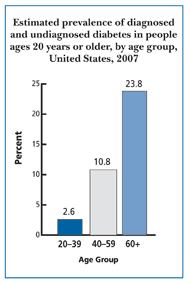
Source: 2003–2006 National Health and Nutrition Examination Survey estimates of total prevalence—both diagnosed and undiagnosed—were projected to year 2007.
[Top]
What is diabetes?
Diabetes is a disorder of metabolism—the way the body uses digested food for growth and energy. Most of the food people eat is broken down into glucose, the form of sugar in the blood. Glucose is the main source of fuel for the body.
After digestion, glucose passes into the bloodstream, where it is used by cells for growth and energy. For glucose to get into cells, insulin must be present. Insulin is a hormone produced by the pancreas, a large gland behind the stomach.
When people eat, the pancreas automatically produces the right amount of insulin to move glucose from blood into the cells. In people with diabetes, however, the pancreas either produces little or no insulin, or the cells do not respond appropriately to the insulin that is produced. Glucose builds up in the blood, overflows into the urine, and passes out of the body in the urine. Thus, the body loses its main source of fuel even though the blood contains large amounts of glucose.
[Top]
What are the types of diabetes?
The three main types of diabetes are
- type 1 diabetes
- type 2 diabetes
- gestational diabetes
Type 1 Diabetes
Type 1 diabetes is an autoimmune disease. An autoimmune disease results when the body’s system for fighting infection—the immune system—turns against a part of the body. In diabetes, the immune system attacks and destroys the insulin-producing beta cells in the pancreas. The pancreas then produces little or no insulin. A person who has type 1 diabetes must take insulin daily to live.
At present, scientists do not know exactly what causes the body’s immune system to attack the beta cells, but they believe that autoimmune, genetic, and environmental factors, possibly viruses, are involved. Type 1 diabetes accounts for about 5 to 10 percent of diagnosed diabetes in the United States. It develops most often in children and young adults but can appear at any age.
Symptoms of type 1 diabetes usually develop over a short period, although beta cell destruction can begin years earlier. Symptoms may include increased thirst and urination, constant hunger, weight loss, blurred vision, and extreme fatigue. If not diagnosed and treated with insulin, a person with type 1 diabetes can lapse into a life-threatening diabetic coma, also known as diabetic ketoacidosis.
Type 2 Diabetes
The most common form of diabetes is type 2 diabetes. About 90 to 95 percent of people with diabetes have type 2. This form of diabetes is most often associated with older age, obesity, family history of diabetes, previous history of gestational diabetes, physical inactivity, and certain ethnicities. About 80 percent of people with type 2 diabetes are overweight.
Type 2 diabetes is increasingly being diagnosed in children and adolescents, especially among African American, Mexican American, and Pacific Islander youth.
When type 2 diabetes is diagnosed, the pancreas is usually producing enough insulin, but for unknown reasons the body cannot use the insulin effectively, a condition called insulin resistance. After several years, insulin production decreases. The result is the same as for type 1 diabetes—glucose builds up in the blood and the body cannot make efficient use of its main source of fuel.
The symptoms of type 2 diabetes develop gradually. Their onset is not as sudden as in type 1 diabetes. Symptoms may include fatigue, frequent urination, increased thirst and hunger, weight loss, blurred vision, and slow healing of wounds or sores. Some people have no symptoms.
Gestational Diabetes
Some women develop gestational diabetes late in pregnancy. Although this form of diabetes usually disappears after the birth of the baby, women who have had gestational diabetes have a 40 to 60 percent chance of developing type 2 diabetes within 5 to 10 years. Maintaining a reasonable body weight and being physically active may help prevent development of type 2 diabetes.
About 3 to 8 percent of pregnant women in the United States develop gestational diabetes. As with type 2 diabetes, gestational diabetes occurs more often in some ethnic groups and among women with a family history of diabetes. Gestational diabetes is caused by the hormones of pregnancy or a shortage of insulin. Women with gestational diabetes may not experience any symptoms.
Diabetes in Youth
The SEARCH for Diabetes in Youth multicenter study, funded by the Centers for Disease Control and Prevention (CDC) and the National Institutes of Health (NIH), has determined that
- based on data from 2002 to 2003, a total of 15,000 youth in the United States were newly diagnosed with type 1 diabetes each year. In addition, about 3,700 youth were newly diagnosed with type 2 diabetes each year.
- non-Hispanic white youth had the highest rate of new cases of type 1 diabetes.
- type 2 diabetes was rarely diagnosed among youth younger than 10 years of age.
Additional information about specific rates of new cases of type 1 and type 2 diabetes among youth younger than age 20 can be found in the fact sheet National Diabetes Statistics, 2007, available online at www.diabetes.niddk.nih.gov/dm/pubs/statistics.
[Top]
Other Types of Diabetes
A number of other types of diabetes exist. A person may exhibit characteristics of more than one type. For example, in latent autoimmune diabetes in adults (LADA), also called type 1.5 diabetes or double diabetes, people show signs of both type 1 and type 2 diabetes.
Other types of diabetes include those caused by
- genetic defects of the beta cell—the part of the pancreas that makes insulin—such as maturity-onset diabetes of the young (MODY) or neonatal diabetes mellitus (NDM)
- genetic defects in insulin action, resulting in the body’s inability to control blood glucose levels, as seen in leprechaunism and the Rabson-Mendenhall syndrome
- diseases of the pancreas or conditions that damage the pancreas, such as pancreatitis and cystic fibrosis
- excess amounts of certain hormones resulting from some medical conditions—such as cortisol in Cushing’s syndrome—that work against the action of insulin
- medications that reduce insulin action, such as glucocorticoids, or chemicals that destroy beta cells
- infections, such as congenital rubella and cytomegalovirus
- rare immune-mediated disorders, such as stiff-man syndrome, an autoimmune disease of the central nervous system
- genetic syndromes associated with diabetes, such as Down syndrome and Prader-Willi syndrome
Latent Autoimmune Diabetes in Adults (LADA)
People who have LADA show signs of both type 1 and type 2 diabetes. Diagnosis usually occurs after age 30. Researchers estimate that as many as 10 percent of people diagnosed with type 2 diabetes have LADA. Some experts believe that LADA is a slowly developing kind of type 1 diabetes because patients have antibodies against the insulin-producing beta cells of the pancreas.
Most people with LADA still produce their own insulin when first diagnosed, like those with type 2 diabetes. In the early stages of the disease, people with LADA do not require insulin injections. Instead, they control their blood glucose levels with meal planning, physical activity, and oral diabetes medications. However, several years after diagnosis, people with LADA must take insulin to control blood glucose levels. As LADA progresses, the beta cells of the pancreas may no longer make insulin because the body’s immune system has attacked and destroyed them, as in type 1 diabetes.
Diabetes Caused by Genetic Defects of the Beta Cell
Genetic defects of the beta cell cause several forms of diabetes. For example, monogenic forms of diabetes result from mutations, or changes, in a single gene. In most cases of monogenic diabetes, the gene mutation is inherited. In the remaining cases, the gene mutation develops spontaneously. Most mutations in monogenic diabetes reduce the body’s ability to produce insulin. Genetic testing can diagnose most forms of monogenic diabetes.
NDM and MODY are the two main forms of monogenic diabetes. NDM is a form of diabetes that occurs in the first 6 months of life. Infants with NDM do not produce enough insulin, leading to an increase in blood glucose. NDM can be mistaken for the much more common type 1 diabetes, but type 1 diabetes usually occurs after the first 6 months of life. More information about the two types of NDM, permanent neonatal diabetes and transient neonatal diabetes mellitus, is provided in the fact sheet Monogenic Forms of Diabetes, available online from the NDIC at www.diabetes.nidd.nih.gov/dm/pubs/mody. For printed copies of the fact sheet, call the NDIC at 1–800–860–8747.
MODY usually first occurs during adolescence or early adulthood. However, MODY sometimes remains undiagnosed until later in life. A number of different gene mutations have been shown to cause MODY, all of which limit the pancreas’ ability to produce insulin. This process leads to the high blood glucose levels characteristic of diabetes. More information about specific types of MODY is provided in the fact sheet Monogenic Forms of Diabetes.
Diabetes Caused by Genetic Defects in Insulin Action
A number of types of diabetes result from genetic defects in insulin action. Changes to the insulin receptor may cause mild hyperglycemia—high blood glucose—or severe diabetes. Symptoms may include acanthosis nigricans, a skin condition characterized by darkened skin patches, and, in women, enlarged and cystic ovaries plus virilization and the development of masculine characteristics such as excess facial hair. Two syndromes in children, leprechaunism and the Rabson-Mendenhall syndrome, cause extreme insulin resistance.
Diabetes Caused by Diseases of the Pancreas
Injuries to the pancreas from trauma or disease can cause diabetes. This category includes pancreatitis, infection, and cancer of the pancreas. Cystic fibrosis and hemochromatosis can also damage the pancreas enough to cause diabetes.
Diabetes Caused by Endocrinopathies
Excess amounts of certain hormones that work against the action of insulin can cause diabetes. These hormones and their related conditions include growth hormone in acromegaly, cortisol in Cushing’s syndrome, glucagon in glucagonoma, and epinephrine in pheochromocytoma.
Diabetes Caused by Medications or Chemicals
A number of medications and chemicals can interfere with insulin secretion, leading to diabetes in people with insulin resistance. These medications and chemicals include pentamidine, nicotinic acid, glucocorticoids, thyroid hormone, phenytoin (Dilantin), and Vacor, a rat poison.
Diabetes Caused by Infections
Several infections are associated with the occurrence of diabetes, including congenital rubella, coxsackievirus B, cytomegalovirus, adenovirus, and mumps.
Rare Immune-mediated Types of Diabetes
Some immune-mediated disorders are associated with diabetes. About one-third of people with stiff-man syndrome develop diabetes. In other autoimmune diseases, such as systemic lupus erythematosus, patients may have anti-insulin receptor antibodies that cause diabetes by interfering with the binding of insulin to body tissues.
Other Genetic Syndromes Sometimes Associated with Diabetes
Many genetic syndromes are associated with diabetes. These conditions include Down syndrome, Klinefelter’s syndrome, Huntington’s chorea, porphyria, Prader-Willi syndrome, and diabetes insipidus.
[Top]
How is diabetes diagnosed?
The fasting blood glucose test is the preferred test for diagnosing diabetes in children and nonpregnant adults. The test is most reliable when done in the morning. However, a diagnosis of diabetes can be made based on any of the following test results, confirmed by retesting on a different day:
- A blood glucose level of 100 milli grams per deciliter (mg/dL) or higher after an 8-hour fast. This test is called the fasting blood glucose test.
- A blood glucose level of 140 mg/dL or higher 2 hours after drinking a beverage containing 75 grams of glucose dissolved in water. This test is called the oral glucose tolerance test (OGTT).
- A random—taken at any time of day—blood glucose level of 140 mg/dL or higher, along with the presence of diabetes symptoms.
Gestational diabetes is diagnosed based on blood glucose levels measured during the OGTT. Glucose levels are normally lower during pregnancy, so the cutoff levels for diagnosis of diabetes in pregnancy are lower. Blood glucose levels are measured before a woman drinks a beverage containing glucose. Then levels are checked 1, 2, and 3 hours afterward. If a woman has two blood glucose levels meeting or exceeding any of the following numbers, she has gestational diabetes: a fasting blood glucose level of 95 mg/dL, a 1-hour level of 180 mg/dL, a 2-hour level of 140 mg/dL, or a 3-hour level of 140 mg/dL.
[Top]
What is pre-diabetes?
People with pre-diabetes have blood glucose levels that are higher than normal but not high enough for a diagnosis of diabetes. This condition raises the risk of developing type 2 diabetes, heart disease, and stroke.
Pre-diabetes is also called impaired fasting glucose (IFG) or impaired glucose tolerance (IGT), depending on the test used to diagnose it. Some people have both IFG and IGT.
- IFG is a condition in which the blood glucose level is high—100 mg/dL—after an overnight fast, but is not high enough to be classified as diabetes. The former definition of IFG was 100 mg/dL.
- IGT is a condition in which the blood glucose level is high—140 mg/dL—after a 2-hour OGTT, but is not high enough to be classified as diabetes.
Pre-diabetes is becoming more common in the United States. The U.S. Department of Health and Human Services estimates that at least 65 million U.S. adults ages 20 or older had pre-diabetes in 2007. Those with pre-diabetes are likely to develop type 2 diabetes within 10 years, unless they take steps to prevent or delay diabetes.
The good news is that people with pre-diabetes can do a lot to prevent or delay diabetes. Studies have clearly shown that people can lower their risk of developing diabetes by losing 5 to 7 percent of their body weight through diet and increased physical activity. A major study of more than 3,000 people with IGT found that diet and exercise resulting in a 5 to 7 percent weight loss—about 10 to 14 pounds in a person who weighs 200 pounds—lowered the incidence of type 2 diabetes by nearly 60 percent. Study participants lost weight by cutting fat and calories in their diet and by exercising—most chose walking—at least 30 minutes a day, 5 days a week.
[Top]
What are the scope and impact of diabetes?
Diabetes is widely recognized as one of the leading causes of death and disability in the United States. In 2006, it was the seventh leading cause of death. However, diabetes is likely to be underreported as the underlying cause of death on death certificates. In 2004, among people ages 65 years or older, heart disease was noted on 68 percent of diabetes-related death certificates; stroke was noted on 16 percent of diabetes-related death certificates for the same age group.
Diabetes is associated with long-term complications that affect almost every part of the body. The disease often leads to blindness, heart and blood vessel disease, stroke, kidney failure, amputations, and nerve damage. Uncontrolled diabetes can complicate pregnancy, and birth defects are more common in babies born to women with diabetes.
In 2007, diabetes cost the United States $174 billion. Indirect costs, including disability payments, time lost from work, and reduced productivity, totaled $58 billion. Direct medical costs for diabetes care, including hospitalizations, medical care, and treatment supplies, totaled $116 billion.
[Top]
Who gets diabetes?
Diabetes is not contagious. People cannot “catch” it from each other. However, certain factors can increase the risk of developing diabetes.
Type 1 diabetes occurs equally among males and females but is more common in whites than in nonwhites. Data from the World Health Organization’s Multinational Project for Childhood Diabetes indicate that type 1 diabetes is rare in most African, American Indian, and Asian populations. However, some northern European countries, including Finland and Sweden, have high rates of type 1 diabetes. The reasons for these differences are unknown. Type 1 diabetes develops most often in children but can occur at any age.
Type 2 diabetes is more common in older people, especially in people who are overweight, and occurs more often in African Americans, American Indians, some Asian Americans, Native Hawaiians and other Pacific Islander Americans, and Hispanics/Latinos. National survey data in 2007 indicate a range in the prevalence of diagnosed and undiagnosed diabetes in various populations ages 20 years or older:
- Age 20 years or older: 23.5 million, or 10.7 percent, of all people in this age group have diabetes.
- Age 60 years or older: 12.2 million, or 23.1 percent, of all people in this age group have diabetes.
- Men: 12.0 million, or 11.2 percent, of all men ages 20 years or older have diabetes.
- Women: 11.5 million, or 10.2 percent, of all women ages 20 years or older have diabetes.
- Non-Hispanic whites: 14.9 million, or 9.8 percent, of all non-Hispanic whites ages 20 years or older have diabetes.
- Non-Hispanic blacks: 3.7 million, or 14.7 percent, of all non-Hispanic blacks ages 20 years or older have diabetes.
Diabetes prevalence in the United States is likely to increase for several reasons. First, a large segment of the population is aging. Also, Hispanics/Latinos and other minority groups at increased risk make up the fastest-growing segment of the U.S. population. Finally, Americans are increasingly overweight and sedentary. According to recent estimates from the CDC, diabetes will affect one in three people born in 2000 in the United States. The CDC also projects that the prevalence of diagnosed diabetes in the United States will increase 165 percent by 2050.
[Top]
How is diabetes managed?
Before the discovery of insulin in 1921, everyone with type 1 diabetes died within a few years after diagnosis. Although insulin is not considered a cure, its discovery was the first major breakthrough in diabetes treatment.
Today, healthy eating, physical activity, and taking insulin are the basic therapies for type 1 diabetes. The amount of insulin must be balanced with food intake and daily activities. Doctors may also prescribe another type of injectable medicine. Blood glucose levels must be closely monitored through frequent blood glucose checking. People with diabetes also monitor blood glucose levels several times a year with a laboratory test called the A1C. Results of the A1C test reflect average blood glucose over a 2- to 3-month period.
Healthy eating, physical activity, and blood glucose testing are the basic management tools for type 2 diabetes. In addition, many people with type 2 diabetes require one or more diabetes medicines—pills, insulin, and other injectable medicine—to control their blood glucose levels.
Adults with diabetes are at high risk for cardiovascular disease (CVD). In fact, at least 65 percent of those with diabetes die from heart disease or stroke. Managing diabetes is more than keeping blood glucose levels under control—it is also important to manage blood pressure and cholesterol levels through healthy eating, physical activity, and the use of medications, if needed. By doing so, those with diabetes can lower their risk. Aspirin therapy, if recommended by a person’s health care team, and smoking cessation can also help lower risk.
People with diabetes must take responsibility for their day-to-day care. Much of the daily care involves keeping blood glucose levels from going too low or too high. When blood glucose levels drop too low—a condition known as hypoglycemia—a person can become nervous, shaky, and confused. Judgment can be impaired, and if blood glucose falls too low, fainting can occur.
A person can also become ill if blood glucose levels rise too high.
People with diabetes should see a health care provider who will help them learn to manage their diabetes and who will monitor their diabetes control. Most people with diabetes get care from primary care physicians—internists, family practice doctors, or pediatricians. Often, having a team of providers can improve diabetes care. A team can include
- a primary care provider such as an internist, a family practice doctor, or a pediatrician
- an endocrinologist—a specialist in diabetes care
- a dietitian, a nurse, and other health care providers who are certified diabetes educators—experts in providing information about managing diabetes
- a podiatrist—for foot care
- an ophthalmologist or an optometrist—for eye care
The team can also include other health care providers, such as cardiologists and other specialists. The team for a pregnant woman with type 1, type 2, or gestational diabetes should include an obstetrician who specializes in caring for women with diabetes. The team can also include a pediatrician or a neonatologist with experience taking care of babies born to women with diabetes.
The goal of diabetes management is to keep levels of blood glucose, blood pressure, and cholesterol as close to the normal range as safely possible. A major study, the Diabetes Control and Complications Trial (DCCT), sponsored by the National Institute of Diabetes and Digestive and Kidney Diseases (NIDDK), showed that keeping blood glucose levels close to normal reduces the risk of developing major complications of type 1 diabetes.
This 10-year study, completed in 1993, included 1,441 people with type 1 diabetes. The study compared the effect of two treatment approaches—intensive management and standard management—on the development and progression of eye, kidney, nerve, and cardiovascular complications of diabetes. Intensive treatment aimed to keep A1C levels as close to normal—6 percent—as possible. Researchers found that study participants who maintained lower levels of blood glucose through intensive management had significantly lower rates of these complications. More recently, a follow-up study of DCCT participants showed that the ability of intensive control to lower the complications of diabetes has persisted more than 10 years after the trial ended.
The United Kingdom Prospective Diabetes Study, a European study completed in 1998, showed that intensive control of blood glucose and blood pressure reduced the risk of blindness, kidney disease, stroke, and heart attack in people with type 2 diabetes.
[Top]
What will the future bring?
IIs here with Hope Diabetes Center Ambulatory Reversal Program -ARP.
Points to Remember
What is diabetes?
- a disorder of metabolism—the way the body uses or converts food for energy and growth
What are the main types of diabetes?
- Type I diabetes
- Type II diabetesand Pre-Diabetes
- gestational diabetes
What is the impact of diabetes?
- It affects 64 million people—9 percent of the U.S. population.
- It is a leading cause of death and disability.
- It costs $174 billion per year.
Who gets diabetes?
- people of any age
- people with a family history of diabetes
- others at high risk for type 2 diabetes: older people, overweight and sedentary people, African Americans, Alaska Natives, American Indians, Asian Americans, Native Hawaiians, some Pacific Islander Americans, and Hispanics/Latinos
|